 Reviews

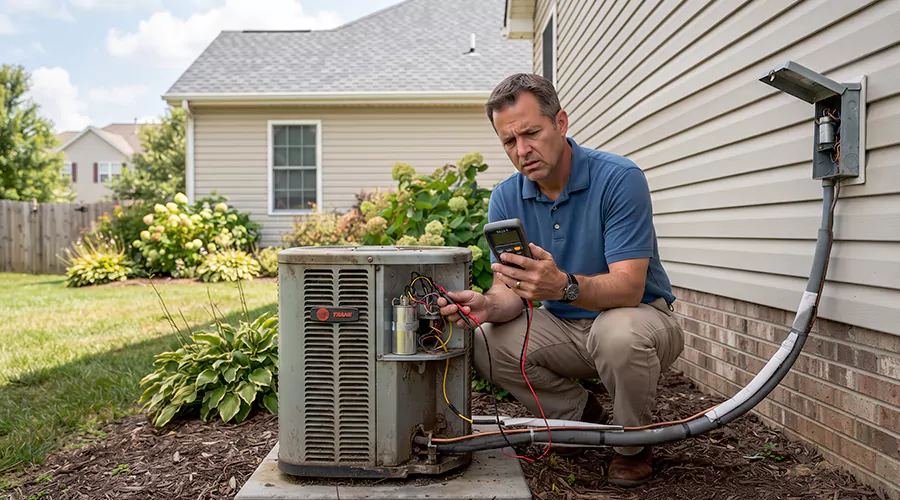
A silent outdoor condenser can mean a $0 thermostat correction or a $200 to $400 capacitor replacement in 2026. An outdoor AC unit not turning on usually has a power problem or a failed start component. A control fault can also stop the cooling call before the condenser starts.
The indoor blower can still move air while the condenser stays off. That creates airflow without active cooling because the outdoor equipment cannot release heat from the refrigerant. A repeated breaker trip or a loud hum raises the chance of an electrical or motor problem.
Why Can the Indoor AC Run While the Outdoor Unit Stays Off?
A split air conditioner has indoor and outdoor sections that receive different control signals and power. The blower can run even when the condenser loses power. The same symptom can appear when the thermostat calls incorrectly or when a safety control interrupts the outdoor startup sequence. The air conditioner outdoor unit contains the compressor and condenser fan on a typical split system. The indoor side moves household air across the evaporator coil. Cooling stops when the outdoor side cannot move refrigerant or reject heat.
This explains why vents can blow room-temperature air even though you hear equipment running indoors. The indoor fan sound does not prove the complete cooling cycle is operating. A useful first check is to compare indoor airflow with what you hear at the condenser. If you are dealing with HVAC not turning on at all, the fault may affect the whole system rather than only the condenser. That difference matters because a fully silent system points toward a different startup path than an indoor blower that still runs.
What Causes an Outdoor AC Unit to Stop Starting?
The most common causes fall into two groups. One group stops electrical power before it reaches the condenser. The other group lets power reach the unit but prevents a motor or control component from responding. The sound at startup often helps separate those two failure patterns.
Thermostat Settings or Control Problems
The thermostat must be set to cooling mode with a target below room temperature. A schedule or dead battery can interrupt the cooling call on some systems. Wait several minutes after changing the setting because many systems use a built-in compressor delay.
Tripped Circuit Breaker
The condenser usually has a dedicated breaker. A surge or electrical fault can trip it and remove power from the outdoor equipment. Move a tripped breaker fully to off before returning it to on. Stop resetting it if it trips again.
Outdoor Disconnect is Off
A service disconnect sits near many condensers. It lets power to the unit be shut off for service. A disconnect left off after maintenance can make the condenser appear completely dead even when the indoor equipment still responds.
Failed Capacitor
A capacitor provides the electrical support that the compressor or fan motor needs during startup. A failed capacitor can leave the unit silent or create a humming sound with no normal start. Installed capacitor replacement commonly costs about $200 to $400 in 2026.
Faulty Contactor
The contactor acts as an electrically controlled switch for the outdoor equipment. A worn or damaged contactor can keep power from reaching a motor even when the thermostat is calling for cooling. Current 2026 pricing puts the average contactor replacement near $220.
Worn Condenser Fan Motor
The fan motor can wear out after years of heat and operating cycles. Current 2026 HVAC cost data places fan motor repair at about $100 to $700. A fan that starts slowly or stops during operation needs attention.
Failed Compressor
The compressor moves refrigerant through the cooling circuit. A failed compressor can leave the outdoor cabinet unable to complete a cooling cycle. Current 2026 repair guides place compressor work around $800 to $3000 depending on the unit and failure.
Condensate Safety Shutdown
Some systems use a float switch that stops cooling when condensate water rises too high. A blocked drain can activate that switch even though the outdoor equipment itself has no mechanical failure. Water around the indoor drain pan is an important clue.
How Does the Problem Progress if You Ignore It?
A no-start problem can stay simple or become expensive depending on the failed part. A thermostat setting costs nothing to correct. A weak electrical component can lead to repeated failed starts. A compressor problem can push the repair into the four-figure range in 2026.
| Stage | What you notice | Likely issue | 2026 cost range |
|---|---|---|---|
| Early | Thermostat does not call for cooling | Setting or battery issue | $0 to low DIY cost |
| Power interruption | Outdoor cabinet is silent | Tripped breaker or disconnect | $0 if no repair is needed |
| Start failure | Unit hums but does not start | Capacitor | $200 to $400 |
| Switching failure | Clicking with no normal startup | Contactor | About $220 average |
| Fan failure | Compressor sound with little fan movement | Fan motor | $100 to $700 |
| Major failure | Outdoor section cannot complete cooling | Compressor | $800 to $3000 |
A key point is that sound can change before complete failure:
- A capacitor can weaken before it stops working.
- A contactor can become pitted before it fails to pass power.
- ntermittent starts are not proof that the problem has corrected itself.
Another cost factor is the diagnostic visit. Current 2026 data places an initial HVAC service call near $100 to $250. That fee is separate from some repair charges depending on the contractor and local market.
What Warning Signs Can You Check Before the Unit Stops Completely?
Early signs often appear before a condenser becomes fully silent. Watch for changed startup sounds and longer cooling cycles. Compare indoor airflow with outdoor operation. Look for repeated breaker trips or standing water near the indoor drain area. These observations can narrow the failure pattern without opening equipment panels.
- The outdoor cabinet stays silent after the thermostat calls for cooling.
- The condenser hums for several seconds but the fan does not start.
- A breaker trips again after one reset.
- The outdoor fan starts slowly compared with its normal startup.
- The condenser clicks repeatedly without beginning a normal cycle.
- Indoor air keeps moving but the room temperature continues rising.
- The outdoor fan stops before the thermostat reaches its target.
- Water appears around the indoor condensate pan.
- Cooling starts only after several thermostat attempts.
- The system works some days but fails during hotter periods.
A completely silent HVAC outside unit points first toward loss of power or loss of the startup signal. A hum suggests that at least part of the electrical path may still be active. The sound alone cannot identify the failed component.
If an air handler not turning on occurs at the same time, the problem is broader than an outdoor-only shutdown. Check the thermostat mode and the main HVAC power controls before focusing on the condenser.
What Safe DIY Test Can You Do Today?
Use a five-minute startup observation instead of opening the condenser cabinet. Set the thermostat to cool and lower the target by about 5°F. Wait five minutes. Then observe the indoor airflow and listen outside. This test separates a no-call problem from an outdoor-only failure pattern.
- Start at the thermostat. Confirm that cooling mode is selected. Replace thermostat batteries if the display is weak or blank and your model uses batteries.
- Next check the main electrical panel. Reset the clearly labeled AC breaker once if it is tripped. Leave it off if it trips again because repeated trips point to an unresolved electrical fault.
- Now stand near the outdoor cabinet without removing any panel. Listen for silence or humming. Note any repeated clicking. These clues help describe what happens during the startup attempt.
- Do not touch the capacitor or contactor.
- Do not reach through the fan grille.
- High-voltage parts can remain hazardous even after the system has been switched off.
When Should You Call a Professional?
Professional diagnosis is appropriate when the breaker trips twice or the condenser hums without starting. It is also needed when electrical components or refrigerant work are involved. Testing a capacitor or compressor requires meters and safe procedures that go beyond a homeowner startup check.
A technician can verify incoming voltage and the low-voltage cooling signal. The technician can measure capacitor values and test the contactor. Motor current can also show whether the fan or compressor is drawing abnormal power. Call for service if the condenser remains dead after the thermostat and breaker checks. Repeated clicking is another trigger. Burning smells or visible wiring damage should end DIY troubleshooting immediately.
EPA Section 608 rules require certification for technicians who perform work that can release refrigerant. That includes connecting gauges or adding refrigerant to many stationary air-conditioning systems. If testing confirms compressor failure, HVAC compressor replacement can become a major decision on an older system. Compare the repair price with system age and the condition of the indoor coil. A matched indoor and outdoor system can affect efficiency after replacement.
An ac compressor repair should never begin with guessing based only on a humming sound. A bad capacitor can create a similar startup symptom at a much lower repair cost. Diagnosis should confirm the failed part before replacement is approved.
How Can You Prevent Another Outdoor AC Startup Failure?
Preventive care reduces stress on the parts that start and run the condenser. Check the filter every month during heavy use. Keep the outdoor cabinet clear of debris. Schedule a cooling check once a year so electrical connections and the startup cycle can be inspected.
Basic ac unit maintenance starts with airflow. ENERGY STAR recommends checking the central system filter each month. A dirty filter makes equipment work harder and can contribute to early failure. Keep leaves and grass away from the condenser. Cleaning outside ac unit surfaces should focus on accessible debris around the cabinet rather than internal electrical parts. ENERGY STAR advises keeping both indoor and outdoor equipment clear of debris.
Schedule ac condenser cleaning when dirt is restricting the coil. Dirty condenser coils reduce cooling ability and can increase operating time. ENERGY STAR includes coil cleaning in its cooling maintenance checklist. A 2026 AC tune-up usually costs about $75 to $200. That preventive expense is far below a compressor repair that can reach $3000. Annual service is best scheduled in spring before peak cooling demand.
Conclusion
An outdoor AC unit not turning on should be checked in a safe order. Start with the thermostat and then check the breaker once. Listen for silence or humming without opening the cabinet. A repeated trip or failed startup points to deeper electrical testing. Professional diagnosis makes sense when basic checks do not restore operation. This week, clear debris around the condenser and check your filter.